
01 / FinOps · Cloud · Data · Integrations · Flexera
Cloud Cost Optimization
At Flexera, I led product work around Cloud Cost Optimization and its integration with ProsperOps, connecting cloud cost visibility and intelligence with optimization capabilities in a more unified FinOps experience.
- Role
- Senior Product Manager
- Product
- Cloud Cost Optimization · ProsperOps integration
- Focus
- FinOps · Cloud data · Integrations · Platform
Context
Cloud cost management requires more than visibility. FinOps teams operate on large volumes of usage and spend data, and the value of that data depends entirely on whether it can be turned into a decision.
The product opportunity was to connect Flexera's Cloud Cost Optimization experience with ProsperOps, so users could move more naturally from understanding cloud economics to optimization action.
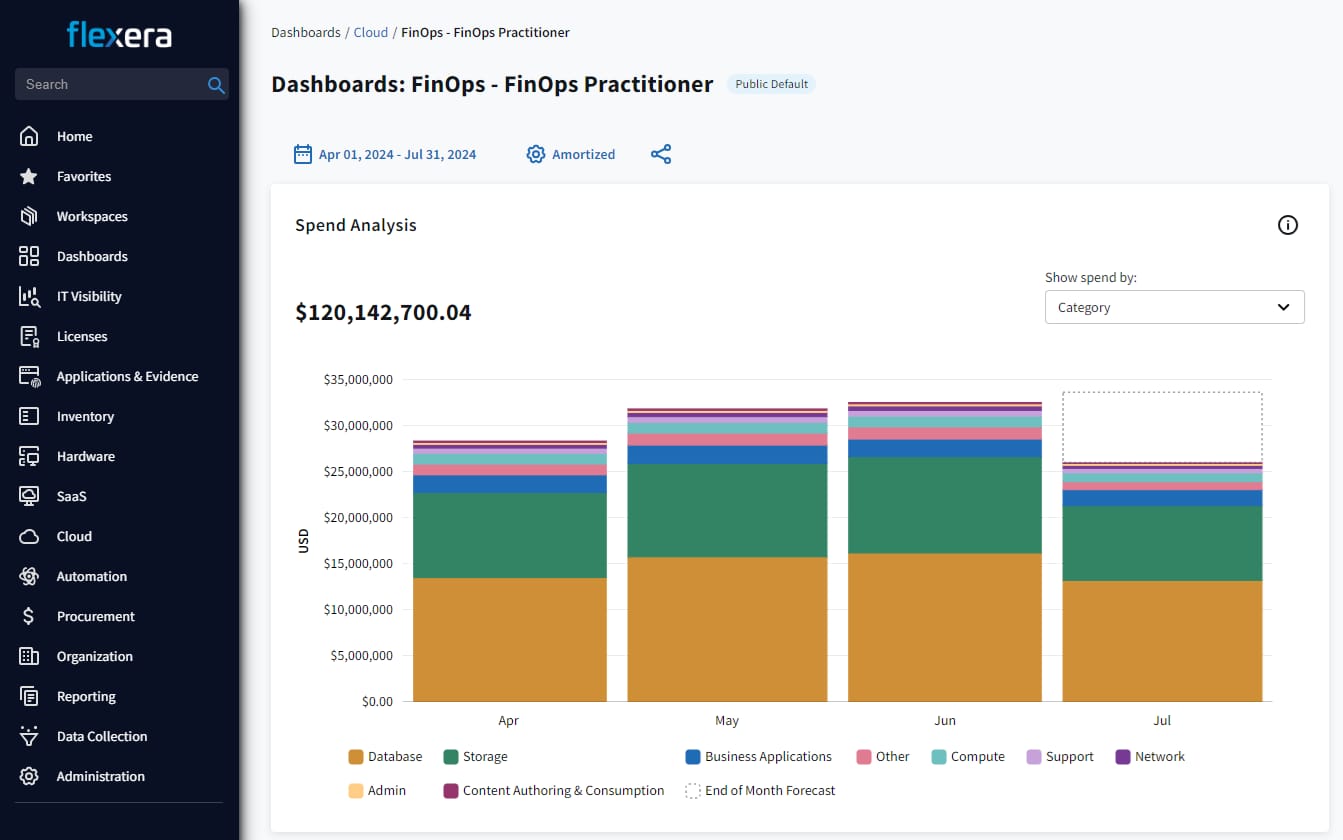
Where spend goes
Cloud cost attributed across accounts, services and business units.
How it changes
Usage and cost movement over time, not a single point-in-time view.
Where opportunity exists
Rate and usage inefficiencies surfaced as concrete opportunities.
Which actions help
A clear path from an opportunity to the action that realises it.
How it all connects
Optimization as part of the cloud management workflow, not beside it.
Core product idea
Visibility is only useful when it leads to action.
The integration connected cloud cost intelligence with optimization capabilities, creating a more complete FinOps workflow: spend data explains the situation, optimization changes it.
Cloud Cost Optimization
Turning cloud data into opportunities.
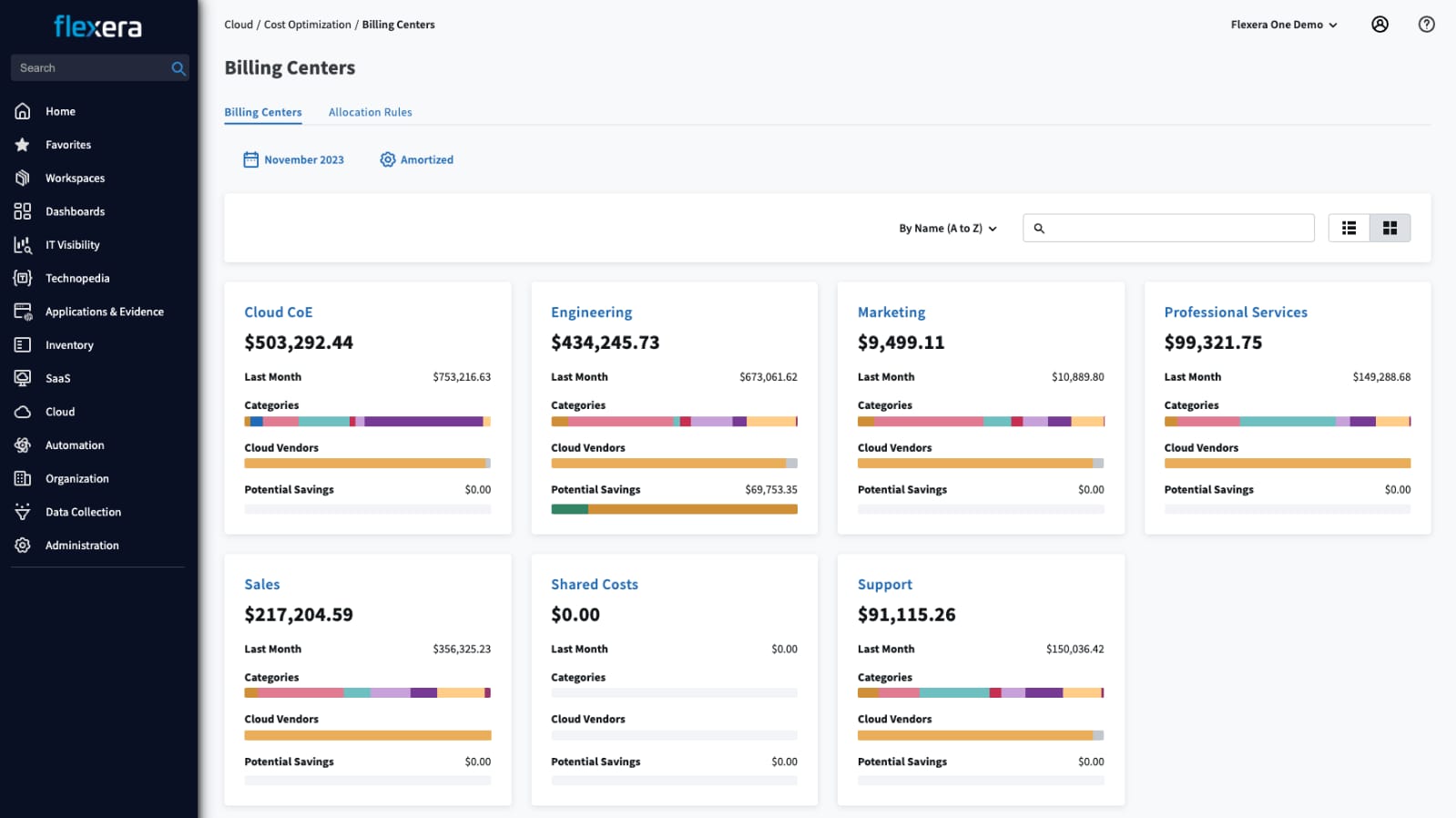
Cost allocation is the foundation. Billing centers organise cloud spend against the way a business is actually structured, which is what makes attribution, accountability and optimization targets meaningful.
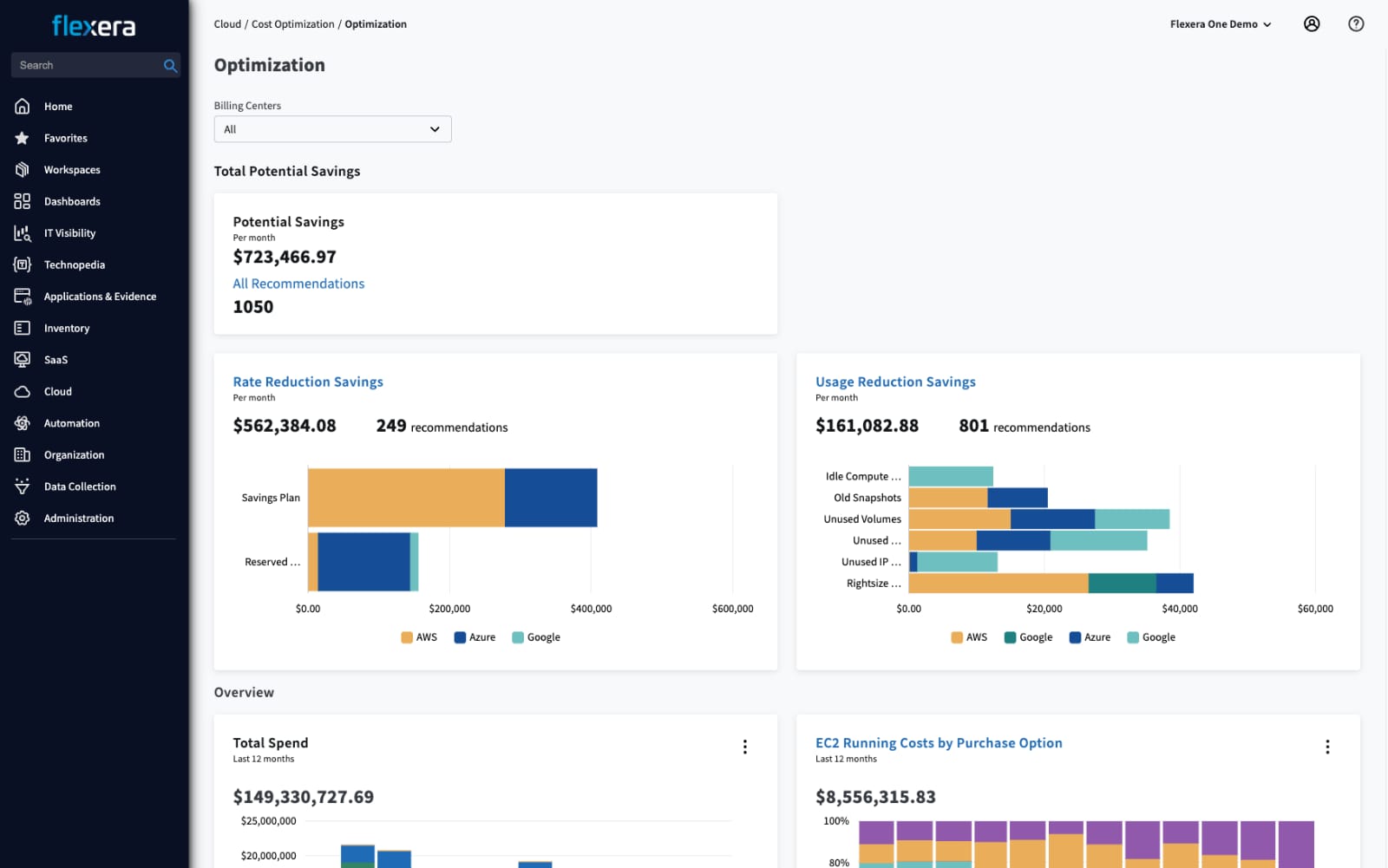
On top of that structure, the optimization experience surfaces rate and usage reduction opportunities as quantified recommendations rather than raw findings.
ProsperOps integration
Two capabilities, one workflow.
Flexera Cloud Cost Optimization
Provides the broader context: cloud spend, usage, cost allocation, optimization opportunities and FinOps visibility.
ProsperOps
Adds automated cloud optimization capabilities on top of that context.
Connected experience
The product experience connects cost intelligence with optimization action rather than forcing users to treat them as disconnected workflows.
An integration is a product decision, not a connector. The question is where in the workflow the second capability belongs.
My role
My role was to translate the integration opportunity into product requirements and workflows, working closely with engineering to connect Cloud Cost Optimization with ProsperOps in a way that felt native to the broader platform experience.
Product & integration strategy
Defined how the two capabilities should relate inside one FinOps experience.
Requirements & workflow
Specified the user workflow from cost visibility through to optimization action.
Prioritisation
Sequenced the work so the connected experience shipped coherently rather than in fragments.
Engineering collaboration
Worked with multiple developers across a data-heavy product surface.
Product considerations
Context
Users need visibility into cloud economics before any optimization conversation makes sense.
Opportunity
Visibility alone does not create savings. Understanding a number is not the same as changing it.
Integration
Optimization capabilities should connect naturally to the cost-management workflow users already run.
Product experience
Users should move from understanding an opportunity to acting on it without feeling like they crossed into an unrelated product.
Platform thinking
The integration should read as part of a broader FinOps ecosystem rather than an isolated feature.
Reflection
Cloud cost data becomes a product when it shortens the distance to action.
The hard part of FinOps is not producing numbers. It is designing the path between the number and the change it should trigger — and making that path feel like one product.
Next case study
AI Compliance Platform
Designing an AI-powered compliance engine at enterprise scale