03 / AI · Wellbeing · 0→1
Building an AI-powered wellbeing ecosystem from 0 → $500K ARR
I founded and led product from zero, shaping the product, commercial model, go-to-market and experimentation strategy behind an AI-powered wellbeing ecosystem designed to move employee wellbeing from reactive support toward more predictive, personalized and measurable experiences.
- Role
- Product Lead & Co-Founder
- Product
- AI-powered wellbeing ecosystem
- Focus
- 0→1 · AI · Personalization · Product Strategy
$500K
ARR reached in one year
+200%
Active users in 12 months
+15%
Product engagement
The problem
Employee wellbeing often becomes visible only after it begins affecting stress, performance, absenteeism, engagement or retention.
Traditional support tends to be reactive: resources become available once a problem is already obvious.
How can technology help people and organizations identify meaningful wellbeing signals earlier and turn them into useful action?
The product bet
From reactive support to predictive wellbeing.
The product strategy centered on helping employees understand their wellbeing earlier, receive more relevant actions and build healthier habits — while giving organizations aggregated signals that could help them respond more proactively.
The ecosystem
One ecosystem. Two connected experiences.
Mia
Personalized wellbeing for employees
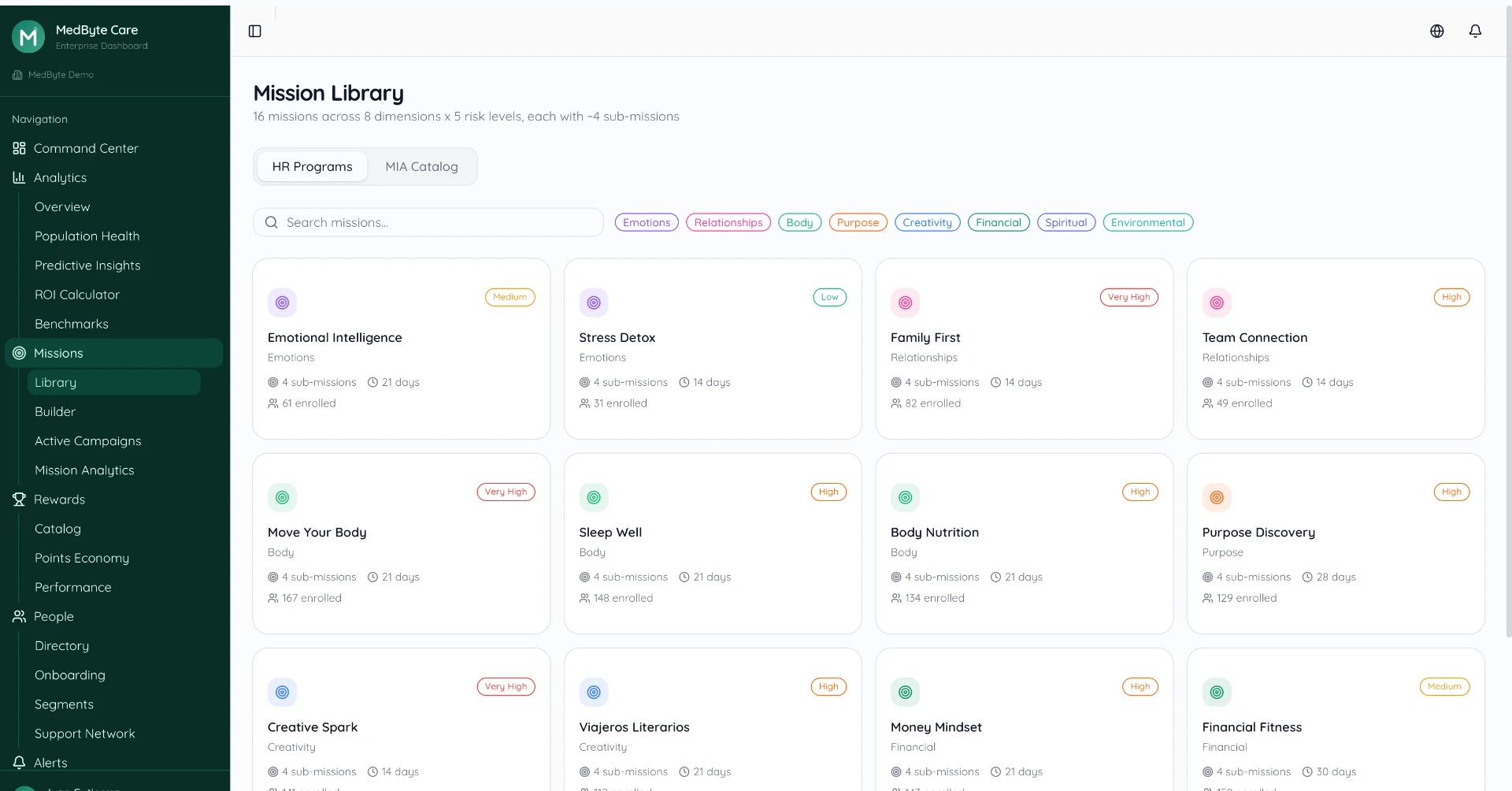
01 — Check in
Quick emotional and wellbeing check-ins.
02 — Understand
Mia identifies patterns and personalizes the experience.
03 — Take action
Missions, challenges and expert-designed recommendations.
Understand → Take action → Stay consistent
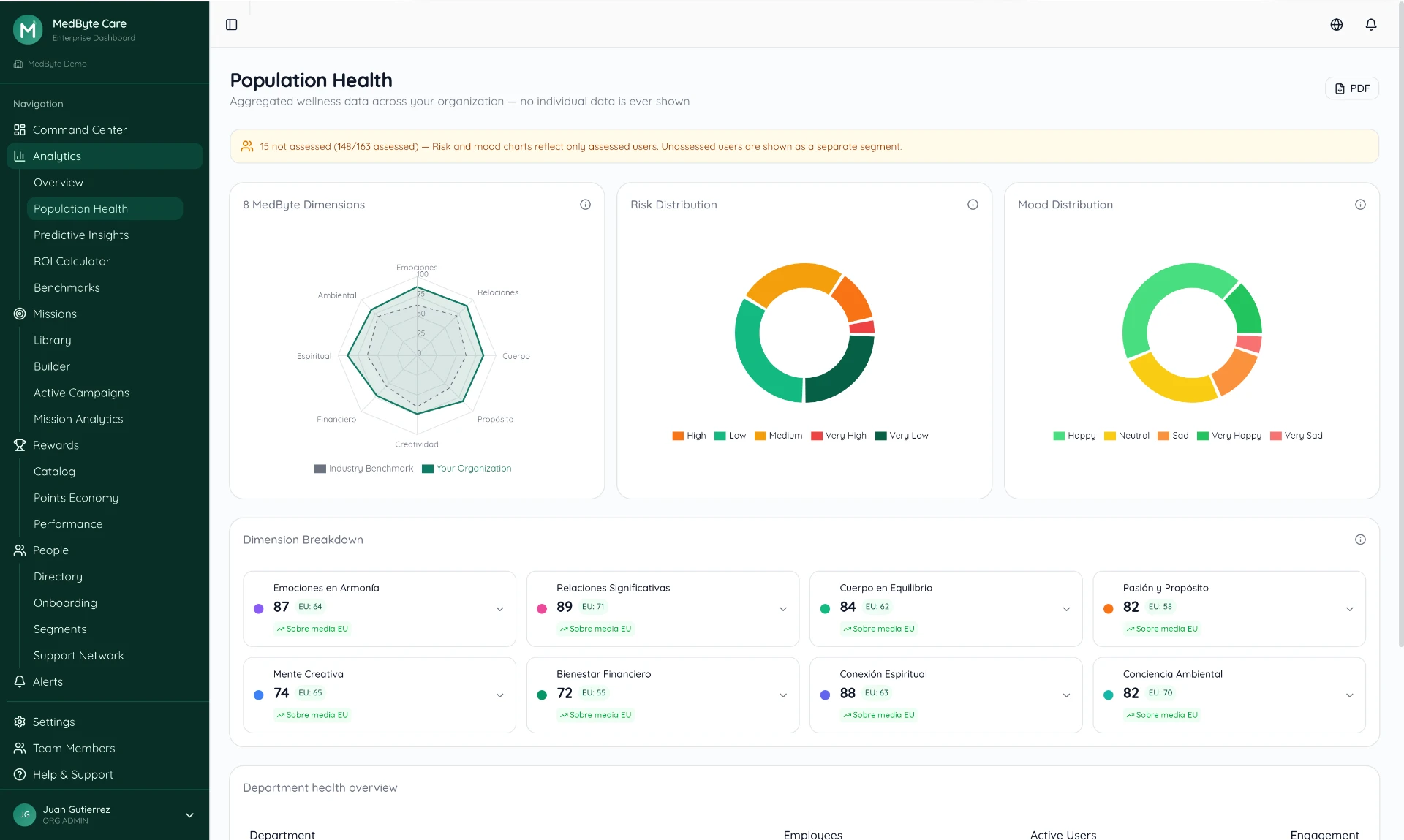
MedByte Care
Predictive intelligence for organizations
- Aggregated wellbeing trends
- Participation and engagement data
- Early risk indicators
- Population-level insights
- Measurable progress
The organizational layer works on aggregated intelligence — never individual conversations or private individual wellbeing data.
AI & data role
AI is not a tag on this product. It is the mechanism that turns ongoing wellbeing signals into a more predictive, personalized, relevant, timely and measurable experience — for the person first, and for the organization in aggregate.
AI is part of the product, not the product by itself.
The goal was not to automate wellbeing. It was to use signals and personalization to help people receive more relevant support while preserving a human-supported experience.
Personalization
Wellbeing is personal. The experience should be too.
Mia uses the MedByte Score and ongoing signals to turn personal patterns into more relevant and achievable actions.
Understand
See wellbeing across different dimensions of life.
Take action
Receive missions, achievable goals and relevant recommendations rather than generic content.
Stay consistent
Build healthier habits through daily experiences, progress and rewards.
The right action, for the right person, at the right moment.
Product loop
Who it serves
For employees
A private, personalized and rewarding experience designed to help people take action regularly.
For People teams
Aggregated trends, participation data and early-risk indicators without exposing individual conversations.
For business leaders
A proactive way to understand wellbeing patterns and the business impact of disengagement, burnout, absenteeism and turnover.
Organizational intelligence
Turn wellbeing signals into smarter decisions.
Monitor engagement
Identify emerging patterns
Understand employee groups
Measure progress
Support timely intervention
The organizational value comes from aggregated insight — patterns across groups and time — not from exposing individual employee data.
Product principles
Predictive
Not reactive
Personalized
Not generic
Engaging
Not passive
Measurable
Not anecdotal
Human-supported
Not AI-only
Outcome
$500K
ARR reached in one year
+200%
Active users in 12 months
+15%
Product engagement
Reflection
AI creates value when it turns signals into better actions.
For wellbeing products, intelligence alone is not enough. The product has to make insights understandable, translate them into relevant action and create an experience people actually want to return to.
Next case study
MarketRecon
Turning fragmented competitive research into an AI-powered intelligence system